
Loading...
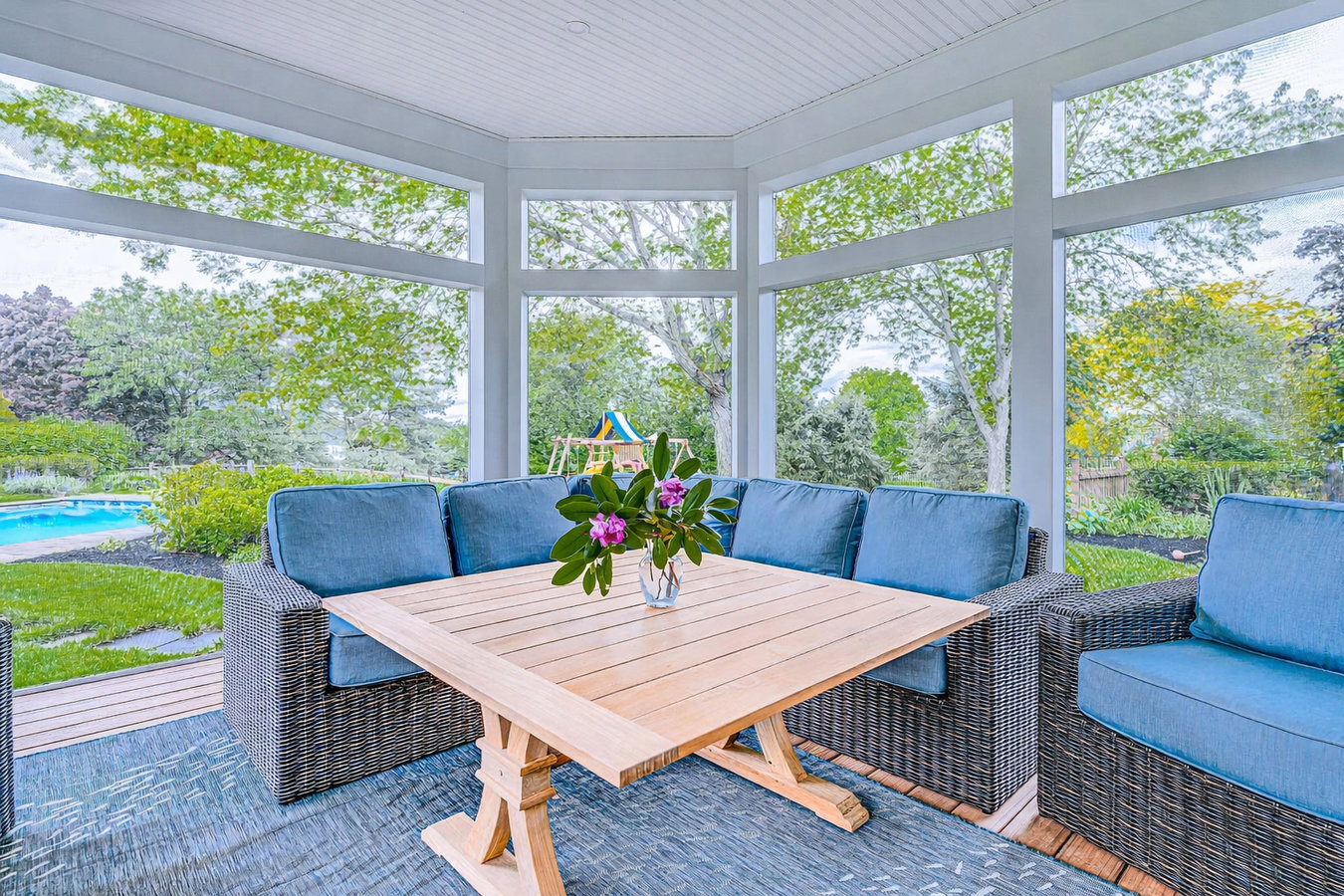
The Hammocks Lanai Sunrooms & Patios builds sunroom additions, patio enclosures, and screen rooms for Miami homeowners, pulling Miami-Dade County permits and handling inspections from start to finish - serving the Miami area since 2018.
The Hammocks Lanai Sunrooms & Patios builds sunroom additions, patio enclosures, and screen rooms for Miami homeowners, pulling Miami-Dade County permits and handling inspections from start to finish - serving the Miami area since 2018.
Miami homes are mostly concrete block and stucco, often built between the 1950s and 1980s, and every project we take here reflects that reality. The county has some of the strictest building requirements in Florida, and working in this city means knowing how to attach new structures to older block walls, handle flat and low-slope roof profiles, and submit permits that pass Miami-Dade review the first time.
Adding a sunroom to a Miami home means working with concrete block walls, flat or low-slope rooflines, and a county permit office that reviews every structural detail carefully. A sunroom addition done correctly here gives you a fully enclosed, climate-controlled space that is officially part of your home's record - not an unpermitted structure that creates problems down the road.
Miami homeowners with rear patios lose that space for most of the year to heat, humidity, and afternoon thunderstorms. A permitted patio enclosure converts that slab into a usable room, and because Miami-Dade requires product-approved glazing on any enclosed structure, the finished space holds up through storm season without the homeowner scrambling to protect it.
Many Miami yards are small and hemmed in by neighboring properties, which means a screen room has to be designed to fit the actual dimensions of the lot rather than a generic plan. We size and engineer screen rooms to Miami-Dade wind load standards, using aluminum framing systems that are county product-approved and rated for the coastal exposure common across Miami neighborhoods.
In Miami, a four season sunroom is not a luxury - it is the only version of a sunroom that makes sense for most of the year. Temperatures from June through September make an uninsulated space unusable for months, and a fully climate-controlled room keeps your HVAC costs manageable while giving you a space you actually reach for every day, not just when the weather cooperates.
Flat-roofed covered patios are common on Miami homes built in the 1960s and 1970s, and they are often structurally sound enough to convert into a fully enclosed sunroom with the right framing approach. Converting rather than rebuilding from scratch saves cost and preserves the slab, and it is a natural fit for the footprint and proportions of Miami mid-century homes.
Miami has plenty of older screened enclosures and Florida rooms added in the 1980s and 1990s that are now showing their age - corroded aluminum frames, torn screens, and glazing that predates current impact requirements. Remodeling an existing enclosure gives homeowners a chance to bring the structure up to current code and replace materials that salt air and decades of South Florida humidity have worn down.
The majority of Miami homes built after World War II use concrete block and stucco construction - CBS framing that handles heat and wind well but responds differently to new additions than wood-frame construction does. Attaching a sunroom or enclosure to a CBS wall means anchoring into the block itself, not into studs, and the quality of the existing stucco at the connection point matters a great deal. Older stucco that has been patched multiple times may not bond the same way as original material, and contractors who are not familiar with this building type sometimes underestimate the prep work involved. Miami also has a high proportion of homes with flat or very low-slope roofs, which requires a different approach to tying a new enclosed structure into an existing roof line compared to a pitched-roof home.
Miami-Dade County sits in a High-Velocity Hurricane Zone, and the county's building requirements reflect that designation. Impact-rated glazing, product-approved framing systems, and engineered structural connections are not optional here - they are required on every permitted enclosure. The county also experiences around 62 inches of rain annually, most of it concentrated between May and October, which means any gap in waterproofing at the connection between a new enclosure and an existing structure gets tested hard every single wet season. Homeowners in Miami who are thinking about adding a sunroom or enclosure should also factor in that the area's proximity to the coast means salt air accelerates corrosion on metal components - choosing the right materials from the start is not just about code compliance, it is about how long the structure actually holds up.
Our crew works throughout Miami regularly, and we understand the local conditions that affect sunroom contractor work here. We pull permits through the Miami-Dade County Building Department on every Miami project, and we know from experience what a complete application package looks like for this county - which matters because incomplete submissions add weeks to the timeline. The homes we encounter most often in Miami are mid-century concrete block and stucco construction, typically with flat or low-slope roofs and small rear yards. That combination requires a specific approach to framing, waterproofing, and staging, and it is one we have worked through on many Miami properties.
Miami is a city most people navigate by a handful of unmistakable reference points. Calle Ocho runs through the heart of Little Havana and is the street most Miami residents have driven or walked at least once. Wynwood, just north of downtown, has shifted from an industrial area to one of the city's most recognized neighborhoods in the past decade. The neighborhoods where most single-family sunroom work happens - Westchester, Flagami, Little Havana, and areas around Coral Way - are all on our regular routes. We also serve homeowners in nearby Sweetwater to the west, where the housing stock and permit requirements are very similar, and in Coral Gables to the southwest, a city we know well.
Contact us by phone or through the contact form and we will get back to you within one business day. We schedule a free on-site visit - no commitment required until you have a written estimate and understand the full scope.
We visit your Miami property, assess the existing block walls, slab, and roof profile, and prepare a written estimate that covers all materials, labor, and permit fees. We walk through cost options at this stage so you understand what you are paying for before agreeing to anything.
We prepare and submit the full permit application to Miami-Dade County, including any required engineer's drawings. Plan for six to ten weeks for county review. We follow up throughout and do not start construction until the permit is issued and posted on site.
Most Miami sunroom projects take two to four weeks of active construction once the permit is in hand. We schedule all required county inspections, walk you through the finished space, and hand over all permit records and inspection documentation.
We serve Miami and the surrounding South Florida area. Call today and we will schedule a visit - we handle Miami-Dade County permits and inspections so you do not have to navigate the process on your own.
(786) 435-0785Miami is the second-largest city in Florida, with roughly 440,000 residents within city limits and more than six million people in the broader metro area. The city grew fast during the postwar decades, and that growth is visible in its housing stock - most single-family homes were built between the 1950s and 1980s in a mix of neighborhoods including Flagami, Little Havana, Allapattah, and Westchester. These areas are dense and residential, with small lots, concrete block construction, and stucco exteriors that are characteristic of South Florida mid-century building. Coconut Grove, one of Miami's oldest neighborhoods, has a different character entirely - shaded streets, larger lots, and homes dating back to the early 1900s. Brickell and downtown, at the other end of the spectrum, are dominated by high-rise condominiums built in the 2000s and 2010s. The city's diversity of neighborhoods and building types means that sunroom and enclosure work here is rarely one-size-fits-all.
For homeowners, Miami's most relevant characteristics are its climate and its building code. The city sits at just a few feet above sea level, it receives around 62 inches of rain annually, and it falls within the Atlantic hurricane belt. Every one of those factors shapes how a sunroom or enclosure must be built to actually hold up here. Miami-Dade County enforces its own building requirements that go beyond Florida's statewide code, particularly around wind resistance and impact glazing. Homeownership is most concentrated in the city's outer residential neighborhoods, and those are the communities where we do the most work. We also serve homeowners in nearby Kendale Lakes to the west and Coral Gables to the southwest, both areas with housing stock and permit requirements we know well.
Affordable three-season rooms that extend your outdoor living months.
Learn MoreScreen rooms that keep bugs out while letting fresh air flow freely.
Learn MoreConvert your existing patio into a fully enclosed sunroom addition.
Learn MoreTurn an underused deck into a bright, weather-protected sunroom space.
Learn MoreFloor-to-ceiling glass solariums that flood your home with natural light.
Learn MoreDurable patio covers that provide shade and protect your outdoor space.
Learn MoreCall us or request a free estimate online - we handle Miami-Dade permits, inspections, and construction so your Miami home gets the enclosed space it deserves.