
Loading...
The Hammocks Lanai Sunrooms & Patios designs and builds custom sunrooms, patio enclosures, and screen rooms for Coral Gables homeowners, managing city permits and Board of Architects submittals on every project - serving the Coral Gables area since 2018.
The Hammocks Lanai Sunrooms & Patios designs and builds custom sunrooms, patio enclosures, and screen rooms for Coral Gables homeowners, managing city permits and Board of Architects submittals on every project - serving the Coral Gables area since 2018.
Coral Gables is built on a different standard than most South Florida suburbs. Homes here are older, lots are larger, the city enforces its own design rules, and homeowners expect work that holds up visually as well as structurally. Every project we take on in Coral Gables is planned with those expectations in mind from the first visit.
Coral Gables homes have a defined architectural character - stucco exteriors, barrel tile roofs, arched details - and a sunroom that does not fit that look stands out in the wrong way. A custom sunroom designed to align with the home's existing style, and submitted correctly through the city's design review process, results in a space that looks like it was always part of the house - not something bolted on after the fact.
Many Coral Gables properties have deep rear patios or covered loggias that are underused because South Florida's insects and afternoon rain make open-air living impractical for months at a time. A properly permitted patio enclosure converts that space into a usable, rain-protected area while keeping the openness that makes it appealing. Attachment to older stucco-over-block walls requires care, and we assess existing wall conditions before any framing begins.
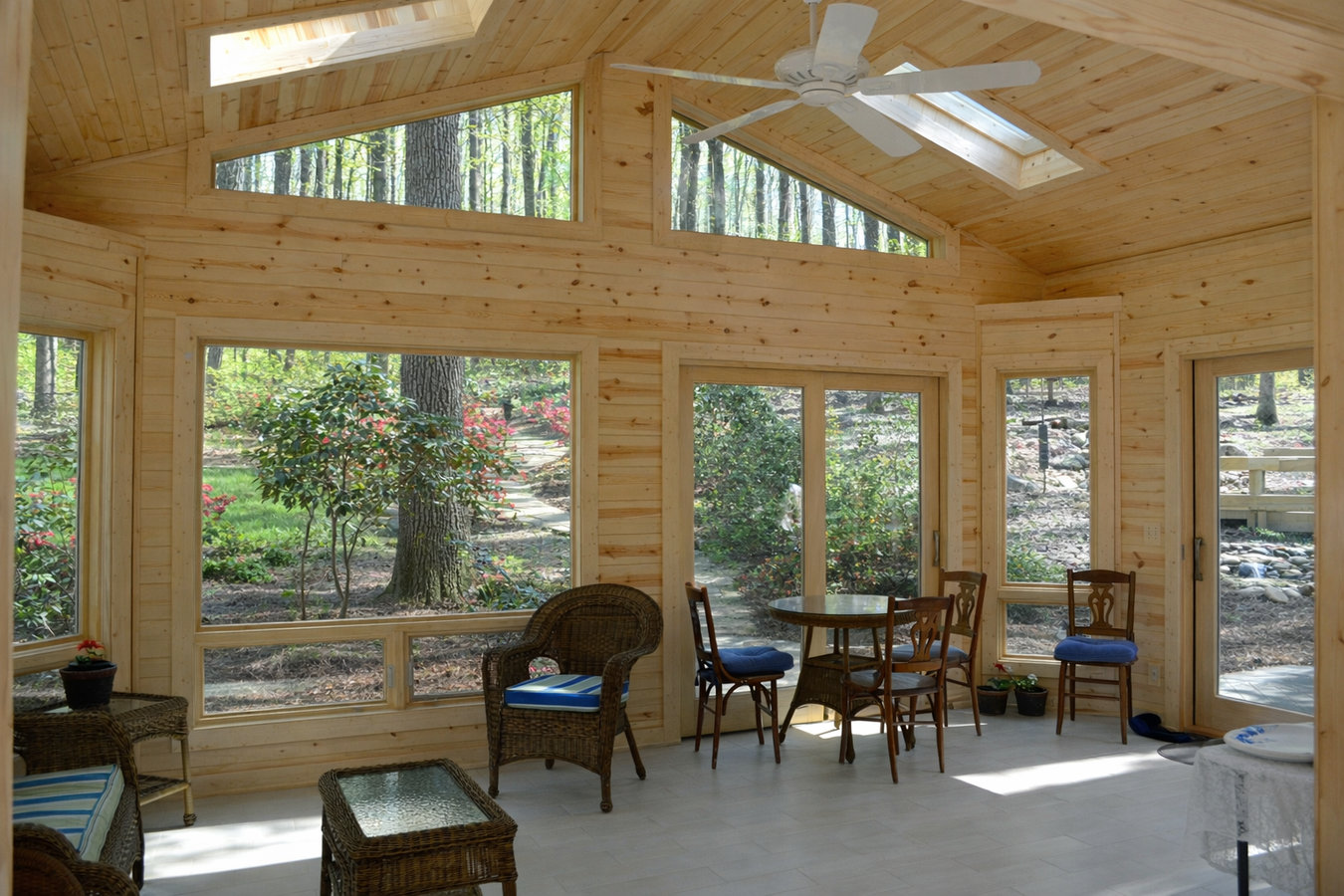
For Coral Gables homeowners who spend most of their time in the space during the drier, cooler months from October through April, a three season sunroom offers a lower-cost path to enclosed outdoor living. The milder weather during those months means ventilation is the priority rather than full climate control, and a well-designed three season room with operable panels handles that well on older Coral Gables properties with existing rear slabs.
The scale of many Coral Gables lots means a screened enclosure can be quite large - covering a pool, terrace, and outdoor kitchen together in a single structure. Projects of that size need properly engineered aluminum framing rated for Miami-Dade wind loads, not off-the-shelf components. A screen room here should feel proportional to the home, and we size and design accordingly.
Some Coral Gables homes have enclosures or Florida rooms that were added decades ago without permits or with materials that no longer meet current code. Remodeling an existing enclosure gives homeowners the chance to bring the space up to code, improve the connection to the house, and update the finishes to match how the rest of the property looks today. We assess the existing structure first to determine what can be salvaged and what needs to be replaced.
Adding square footage to a Coral Gables home is a serious undertaking given the city's permit requirements and design oversight, but a permitted sunroom addition is one of the few improvements that adds genuinely usable indoor space while also increasing the home's appraised value. Homes in Coral Gables hold their value well, and a well-executed addition with proper permits and inspections is an asset that lasts.
Coral Gables was developed starting in the 1920s, and a large share of its homes were built between the 1920s and the 1950s. That age range means many properties are now 70 to 100 years old. Mediterranean Revival architecture defines the city's look - stucco exteriors, barrel clay tile roofs, arched doorways, and decorative ironwork. These materials hold up well, but they require specific knowledge to work with. Stucco on homes of this age has often been patched and repainted multiple times, and the bond between layers is not always consistent. Clay tile roofs can last 50 years, but the underlayment beneath them typically needs replacement every 20 to 30 years. Any addition or enclosure that ties into an older roof or stucco wall on a Coral Gables home needs to be approached with the existing condition of those materials in mind.
The city has one of the strictest design oversight processes in South Florida. Most exterior work on a Coral Gables home requires review by the city's Building Department, and projects that alter the exterior appearance of the home also go through the Board of Architects. That process protects the city's character, but it also means that contractors who are not familiar with Coral Gables' specific requirements can spend months in re-submittal cycles. South Florida's climate adds to the pressure - with around 60 inches of annual rainfall and hurricane season running six months of the year, any delay in getting a properly sealed structure in place is a delay in protecting the home.
Our crew works throughout Coral Gables regularly, and we understand the local conditions that affect sunroom contractor work here. The homes we most often encounter in Coral Gables are genuinely older - not just 30 or 40 years old, but often built in the 1930s or 1940s with original or early-replacement stucco and roofing. When we are attaching a new enclosure or sunroom to a wall of that age, we take the time to identify where the solid block is, where previous repairs may have altered the wall's profile, and how to anchor the new structure without disturbing the existing stucco coating.
Coral Gables is a city that most residents know through a few unmistakable landmarks. The Biltmore Hotel, built in 1926, anchors the western part of the city with its tower visible from blocks away. Miracle Mile, the main shopping street along Coral Way, is the commercial center most residents use regularly. The Venetian Pool, carved from a coral rock quarry in 1923, is one of the most distinctive public spaces in South Florida. Homes in every corner of Coral Gables - from the streets near the Biltmore to the quieter blocks south of Bird Road - are on our regular work routes. We also serve homeowners in nearby Miami to the north and east, as well as in Kendall to the southwest, where the housing stock and climate demands are similarly well-known to our team.
Reach out by phone or through the contact form and we will get back to you within one business day. We schedule a free on-site visit at your convenience - no commitment required until you have a written estimate in hand.
We visit your Coral Gables property, assess the existing stucco walls, slab, and roof structure, and prepare a written estimate covering all materials, labor, permit fees, and any design review costs. We walk through cost options at this stage so there are no surprises later.
We prepare and submit the permit application to the City of Coral Gables Building Department and handle any required Board of Architects coordination. Plan for six to twelve weeks for approval. We follow up throughout the review period and do not begin construction until the permit is posted.
Most Coral Gables projects take two to four weeks of active construction, depending on scope and complexity. We schedule all required city inspections, walk you through the finished space, and hand over all permit documents and inspection records.
We serve Coral Gables and the surrounding South Florida area. Call today and we will schedule a visit - we handle city permits and Board of Architects coordination so you do not have to navigate that process alone.
(786) 435-0785Coral Gables is a city of about 50,000 residents situated just southwest of downtown Miami in Miami-Dade County. Developer George Merrick laid out the city in the 1920s with a deliberate Mediterranean Revival vision - wide, tree-lined streets, large residential lots, stucco-and-tile construction, and a formal city plan that has held up for a century. The result is one of the most architecturally consistent and well-maintained communities in Florida. Median home values in Coral Gables are among the highest in the state, and the city attracts long-term homeowners who invest heavily in maintaining and improving their properties. Neighborhoods range from the leafy blocks near the Venetian Pool and the Biltmore Hotel to the quieter streets south of Bird Road and closer to Kendall Drive.
The housing stock in Coral Gables is older than almost anywhere else in South Florida. The dominant styles are Mediterranean Revival and Spanish Colonial, with stucco exteriors and barrel clay tile roofs that define the city's skyline at every scale. A smaller share of the city's building stock is condominium and commercial, concentrated around Miracle Mile and Brickell Avenue at the northern edge. The city is a full municipality with its own police, fire, and building departments - a detail that matters when pulling permits for an addition or enclosure, because Coral Gables' process is distinct from Miami-Dade County's. We also work regularly with homeowners in nearby Fountainebleau to the north, where the building stock and permit landscape are both familiar to our team.
Affordable three-season rooms that extend your outdoor living months.
Learn MoreScreen rooms that keep bugs out while letting fresh air flow freely.
Learn MoreConvert your existing patio into a fully enclosed sunroom addition.
Learn MoreTurn an underused deck into a bright, weather-protected sunroom space.
Learn MoreFloor-to-ceiling glass solariums that flood your home with natural light.
Learn MoreDurable patio covers that provide shade and protect your outdoor space.
Learn MoreCall us or request a free estimate online - we handle the permits, the design coordination, and the construction so your Coral Gables home gets the addition it deserves.